Snorkel trips, sandbanks and dolphin cruises from Malé and the guesthouse islands: what each
boat really reaches, which trips suit beginners, and when whale sharks and mantas need a longer journey.
Facts checkedMarine rules, seasons and distances from Maldivian official and research sources
Real guest ratingsLive GetYourGuide figures, low review counts included
Refund terms per tripEvery trip here refunds in full up to 24 hours ahead
Secure checkoutBook on GetYourGuide, instant confirmation
Water tours
Choose your water tour
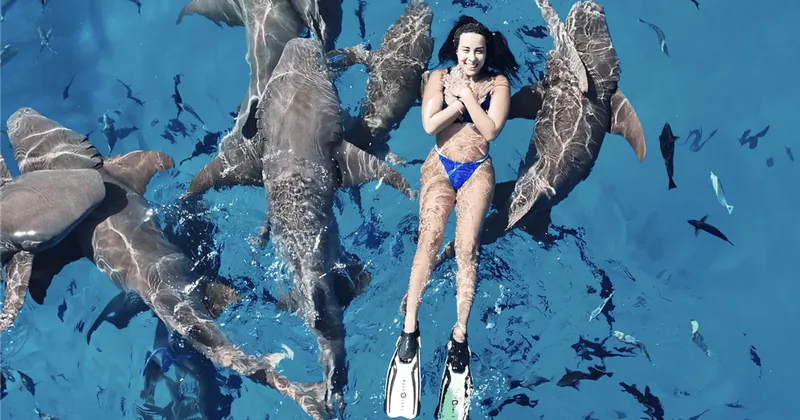
In the centre, the short morning from Malé or Hulhumalé with a reef, nurse sharks and a
sandbank. On the left, the long day from Maafushi with lunch and the dolphin point. On the right, the full day out
of Hulhumalé with an island lunch.
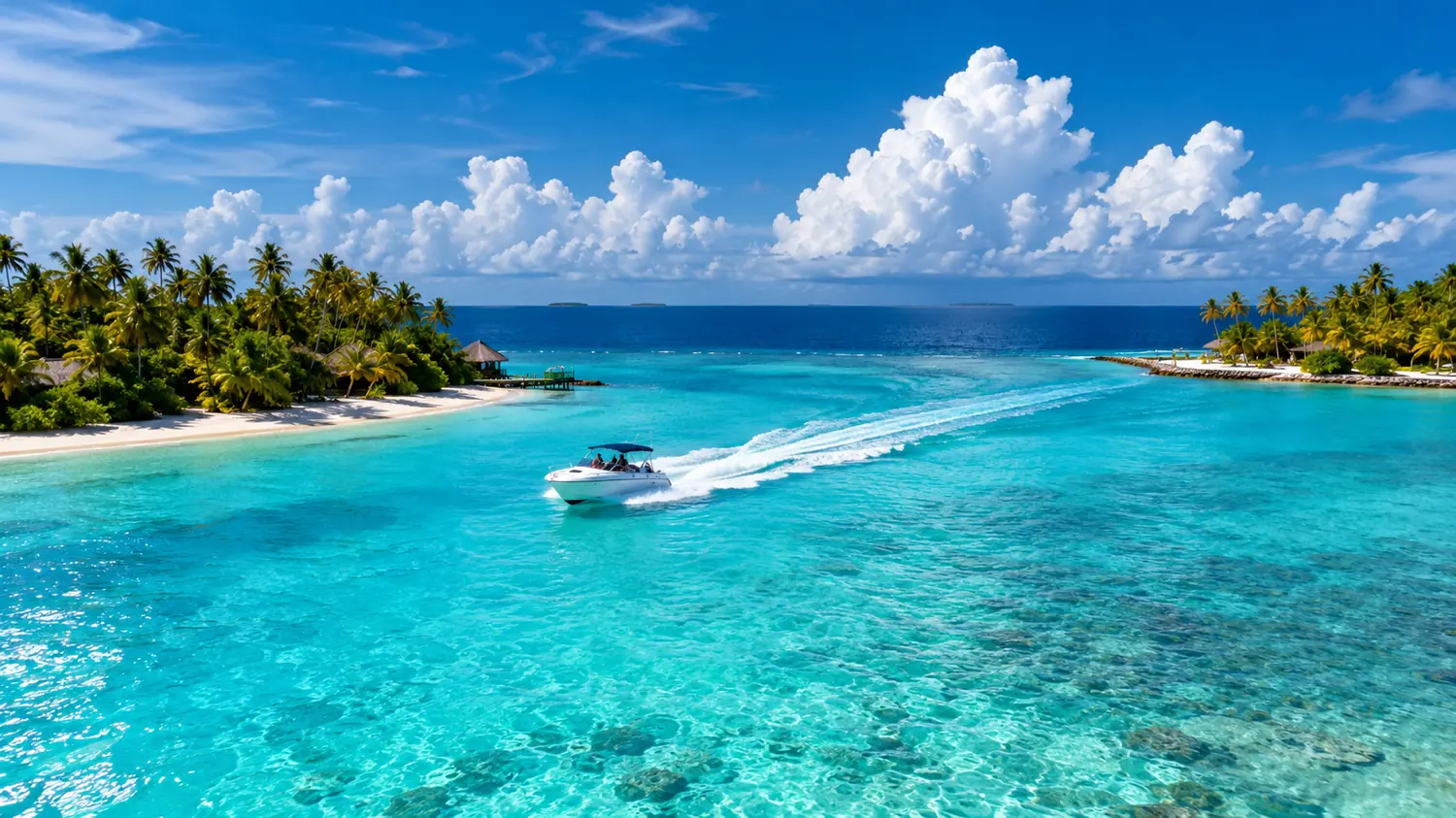
A short speedboat morning from Malé: a coral reef, a nurse shark and stingray spot, then a sandbank. A guide swims with you and a lifeguard watches from the boat.
What's included
Pickup in Malé, Hulhumalé or at the airport
Speedboat with shade and an onboard toilet
Mask, snorkel, fins and a life jacket
A snorkel guide in the water, a lifeguard on board
The most-booked day out from Hulhumalé: the dolphin channel, a sandbank, stingray snorkeling and lunch on a local island. Bigger groups, a relaxed pace.
The first row is the baseline: a calm swim off a bikini beach or a resort house reef, no boat
needed. Each trip below adds something: a guide in the water, a better reef, nurse sharks and stingrays, a
sandbank, dolphins, or the long journey to the whale sharks and mantas.
Option
Starts
Best for
Length
Rating
Cancel
On your own, from the beach
A bikini beach or a house reef, no boat
Confident swimmers who want an easy first look at reef fish
Snorkel gear and life jackets are included on every boat trip here. Maafushi trips start
on the island and do not pick up from resort islands; the whale shark trip starts on Dhigurah or Dhangethi in South
Ari.
What the brochures don't tell you
Most day trips stay close to Malé.
The water tours sold from Malé, Hulhumalé and Maafushi are short boat trips in the North and South Malé
atolls. They are very good at what they do: coral reefs, turtles, nurse sharks and stingrays, a sandbank
and spinner dolphins watched from the boat. Guides choose sheltered spots, hand out life vests and stay in the
water with you.
The famous giants live further out. Whale sharks gather in the South Ari marine area, about 82 km from
Malé, all year, but no crew can promise one, and a day trip from Maafushi means about 90 minutes each way. The
Hanifaru Bay mantas feed in Baa Atoll, about 118 km away, from about May to November, snorkel only. For
either, the simplest plan is a few nights on Dhigurah or near Baa, with a short trip at the right moment.
82 km
from Malé to the South Ari marine area, where whale sharks
are seen all year. Most snorkel trips from Malé stay within an hour of the airport.
MaléHulhumaléMaafushiSouth AriBaa Atoll
Island, lagoon, reef: the shape of every trip.
01
Need to swim?
Not always. Life vests are handed out and guides swim beside weaker swimmers.
02
How long?
Three hours for a morning from Malé, six to seven for a full day, ten for Hanifaru.
03
When?
All year; December to April is driest, May to November brings the Hanifaru mantas.
04
Included?
Mask, snorkel, fins, a life vest and water on every boat trip here.
A morning on the water
Reef, sharks and sand in four stops
The classic half day from Malé or Maafushi, as most operators run it. The order changes with the
tide, because the sandbank is best when the water is low.
01
Pickup and briefing
From your hotel in Malé or Hulhumalé, or the harbour on Maafushi. The crew fits masks and fins and explains how to swim near the animals.
About 15 minutes
02
The coral reef
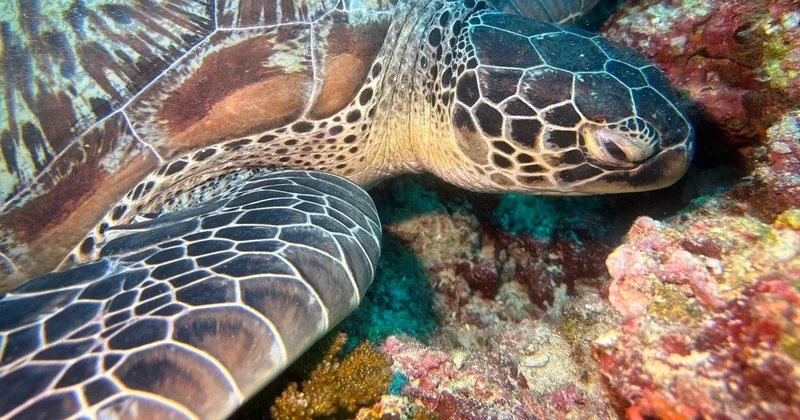
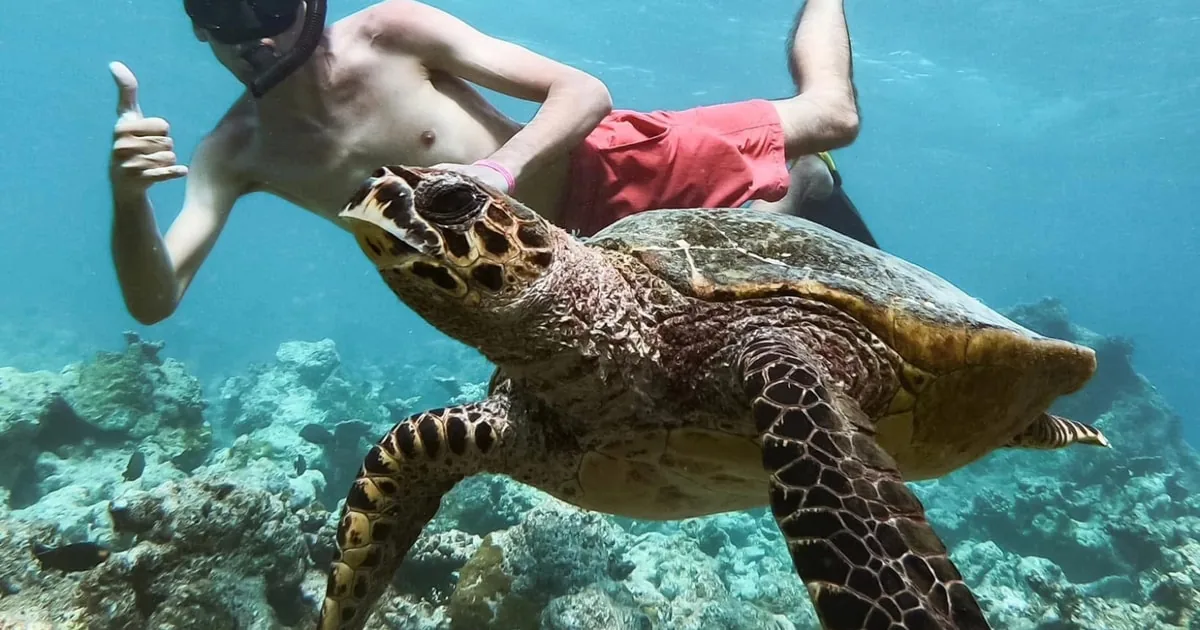
A first snorkel on a sheltered reef: parrotfish, butterflyfish, often a turtle. A guide swims with you and the boat stays close.
The first swim
03
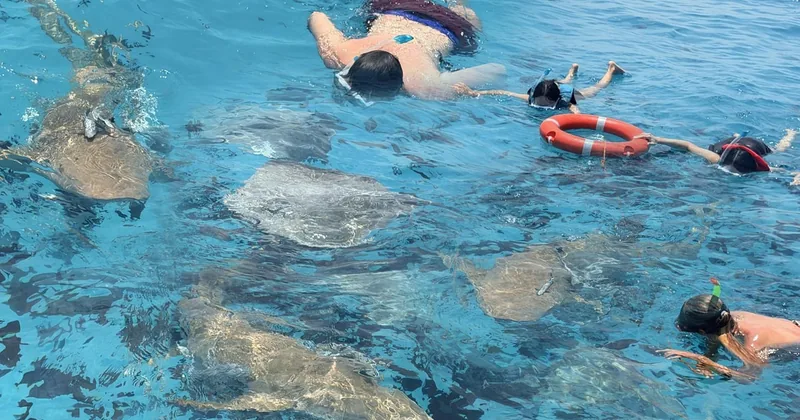
Nurse sharks and rays
A shallow spot where calm nurse sharks and stingrays gather. Float above them, keep your hands to yourself and let them pass.
The highlight
04
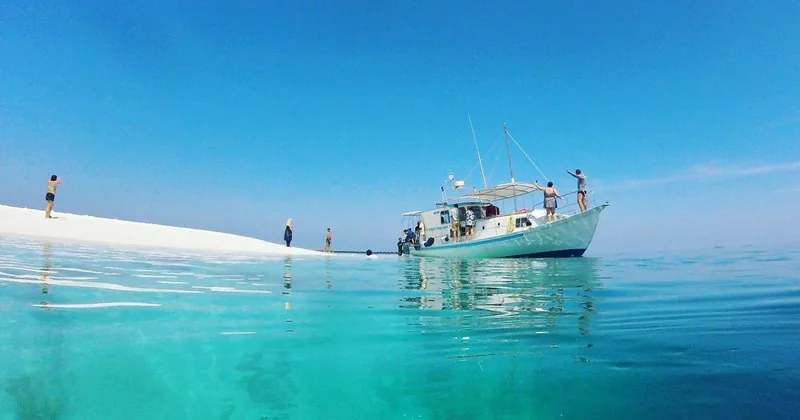
The sandbank
A strip of white sand in the open lagoon, there only when the tide allows. Time to swim, rest and take the photos.
The kinds of water tour on offer, how to reach the islands they leave from, what to bring and the rules worth knowing.
Snorkel trips: two or three reef stops in three to four hours, usually with nurse sharks, stingrays or turtles.
Sandbank trips: a boat to a strip of sand in the lagoon, timed to the tide, often with a snorkel stop.
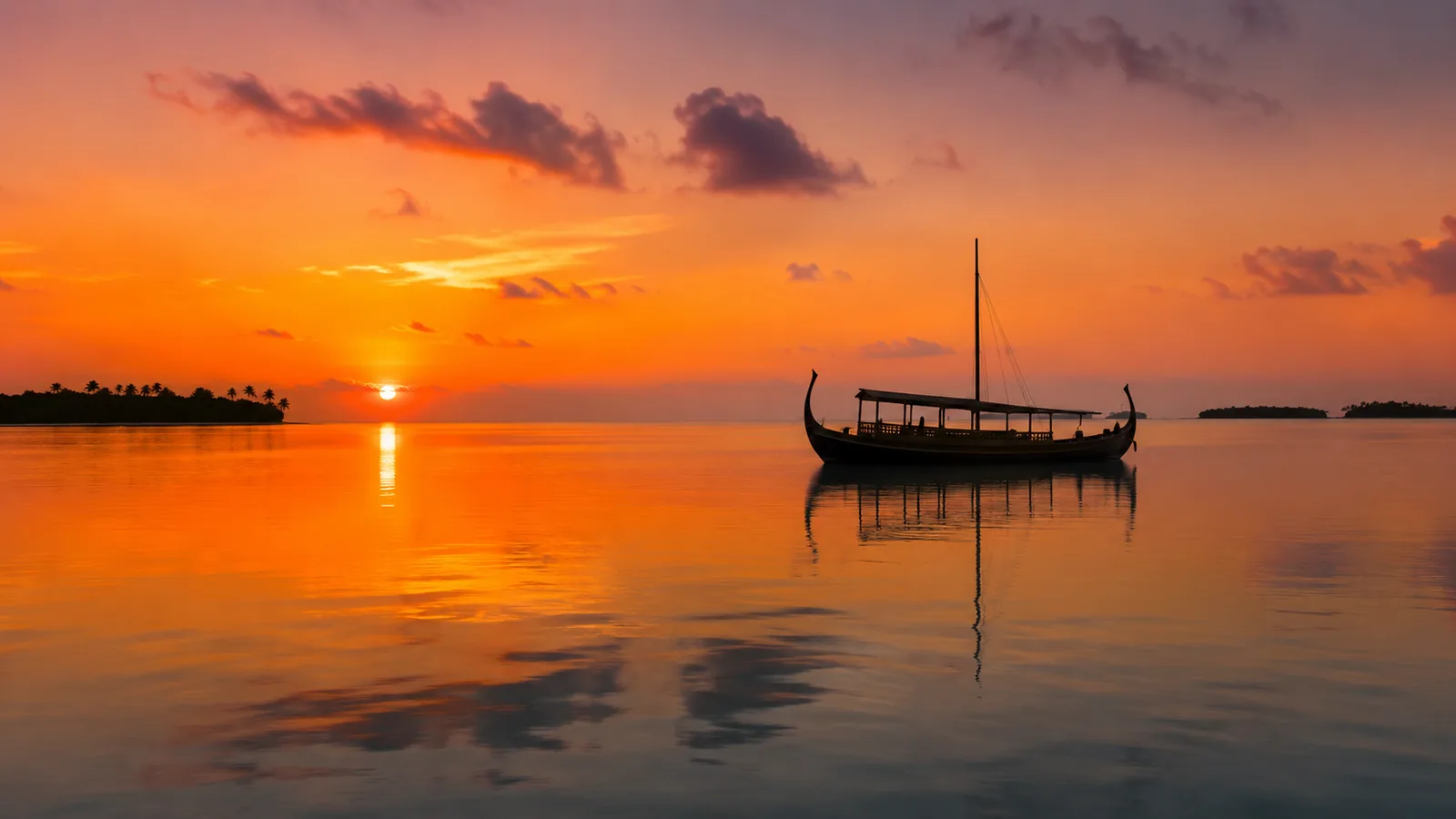
Dolphin cruises: spinner dolphins watched from the boat at sunrise or sunset, no swimming.
Whale sharks: South Ari Atoll, a short trip from Dhigurah or a long day from Maafushi.
Mantas: cleaning stations all year, and Hanifaru Bay in Baa Atoll from about May to November.
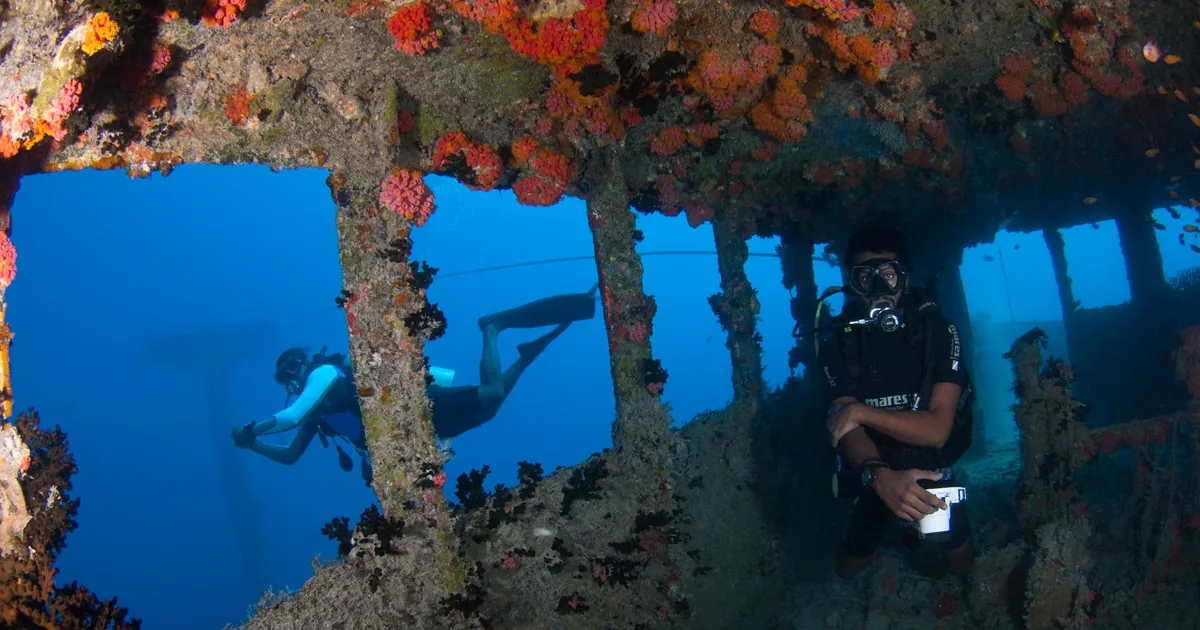
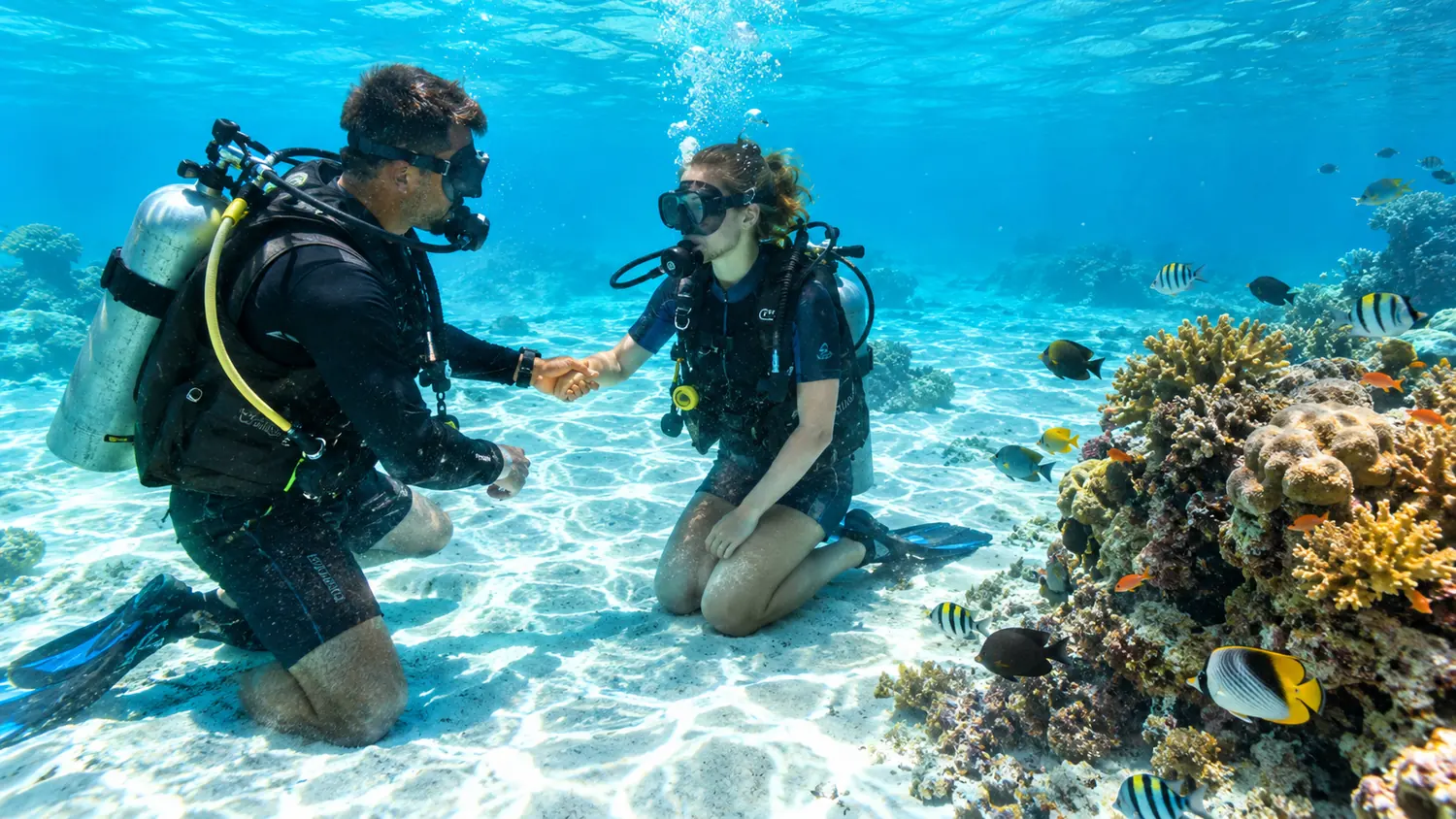
First dives and submarines: a Discover Scuba dive with an instructor, or a dry passenger submarine.
The airport: Velana International Airport, on Hulhulé, linked by bridge to Malé and by road to Hulhumalé.
Malé and Hulhumalé: most snorkel trips pick up from hotels here or meet at a jetty.
Maafushi: under an hour by speedboat from the airport, or about 1.5 hours by public ferry.
Fridays: the public MTCC ferries do not run, so plan island transfers by speedboat.
South Ari: about 2 hours by speedboat to Dhigurah, or a short flight to Maamigili and a boat.
Rash vest: a long-sleeved swim top protects better from the equatorial sun than lotion alone.
Sunscreen: a mineral one, put on well before you swim; sunglasses and a hat for the boat.
Towel and dry clothes: some trips include a towel, many do not.
Seasickness tablets: if you are prone to it, the open water between atolls can be lively.
Cash: small notes for a cafe on a local island or a tip for the crew.
Hands off: no touching, feeding or chasing turtles, sharks, rays or whale sharks, and no standing on coral.
Distance: keep at least 3 m from a whale shark and 4 m from its tail; mantas deserve the same space.
Nothing taken home: collecting or exporting coral and shells is not allowed.
Dress: swimwear on boats, sandbanks and bikini beaches; shoulders and knees covered in island villages.
Alcohol: only at licensed resorts and on licensed tourist vessels, never on local islands or local boats.
82 kmSouth AriWhale sharks all year.
118 kmHanifaru BayMantas, May to November.
6,000+Reef mantasIdentified in the Maldives.
3 mWhale shark ruleThe minimum distance.
1 mTidal rangeEnough to cover a sandbank.
2010Sharks protectedReef sharks a common sight.
Where trips start
Malé, Hulhumalé and Maafushi
The jetties around the airport
Hulhumalé, Malé and Maafushi, Kaafu Atoll
Trips from Malé and Hulhumalé usually include a pickup from your hotel, or meet at a jetty such as the
Hulhumalé excursion jetty, a few minutes by road from Velana International Airport. Trips from Maafushi leave
from the island's harbour; the operator sends the exact time and place the evening before. Resort guests should
check with their resort before booking, because most guesthouse operators cannot collect from private resort
islands.
Honestly one of the best experiences of our lives. The trip was very safe, and the staff were friendly, kind and caring and made us feel at ease. We saw a turtle, many sharks and stingrays, and the sandbank was beautiful.
★★★★★
The trip was so much fun, we had an amazing day. My friend didn't know how to swim and we were worried she wouldn't enjoy it, but everyone was so patient with her and gave all the support she needed.
★★★★★
The snorkeling was truly unforgettable. We saw so many stingrays gliding gracefully beneath us, along with an incredible variety of colourful fish in crystal-clear water.
★★★★★
Our captain and guides were so helpful getting us to a spot where we could see the whale shark with fewer people. We saw the mantas twice, whale sharks twice, and dolphins, flying fish and even a batfish.
★★★★★
Wonderful, magical experience. The guides were friendly, helpful and attentive with each person in the group and I felt really safe. We got to see lovely big turtles, corals and many colourful fish.
★★★★★
For a beginner who has never done this before, it's perfect. My instructor made me feel calm and was with me the whole way. First you watch a safety video, and he goes through the safety points again before you go in.
Rather stay dry?
See the reef from below
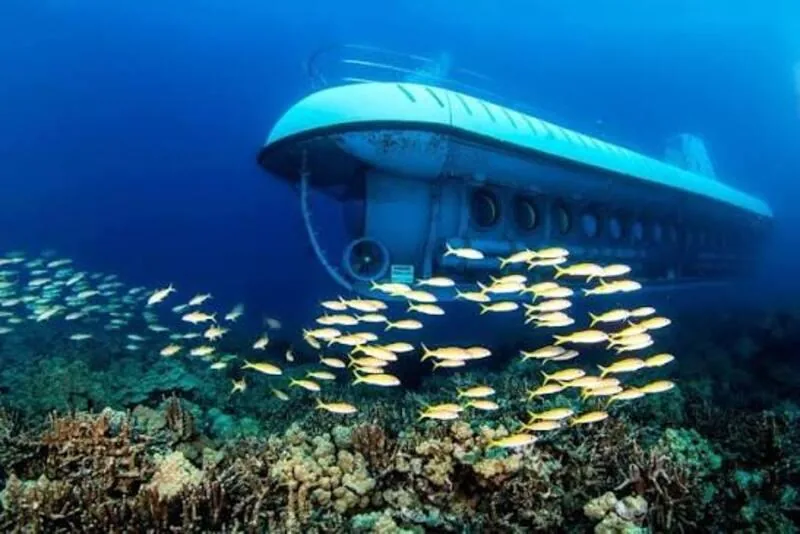
Not everyone wants to put their face in the water, and some travellers can't. A passenger submarine
off Malé takes you down past the reef to deeper water, with no swimming at all.
Submarine Dive to 45 Metres
New listing · 2.5 hours · GetYourGuide
For anyone who would rather stay dry: a passenger submarine off Malé descends to about 45 metres in a 45-minute dive, with stops at the reef and in deeper water, viewed through large windows. Pickup in Malé or Hulhumalé. Full refund if you cancel up to 24 hours ahead.
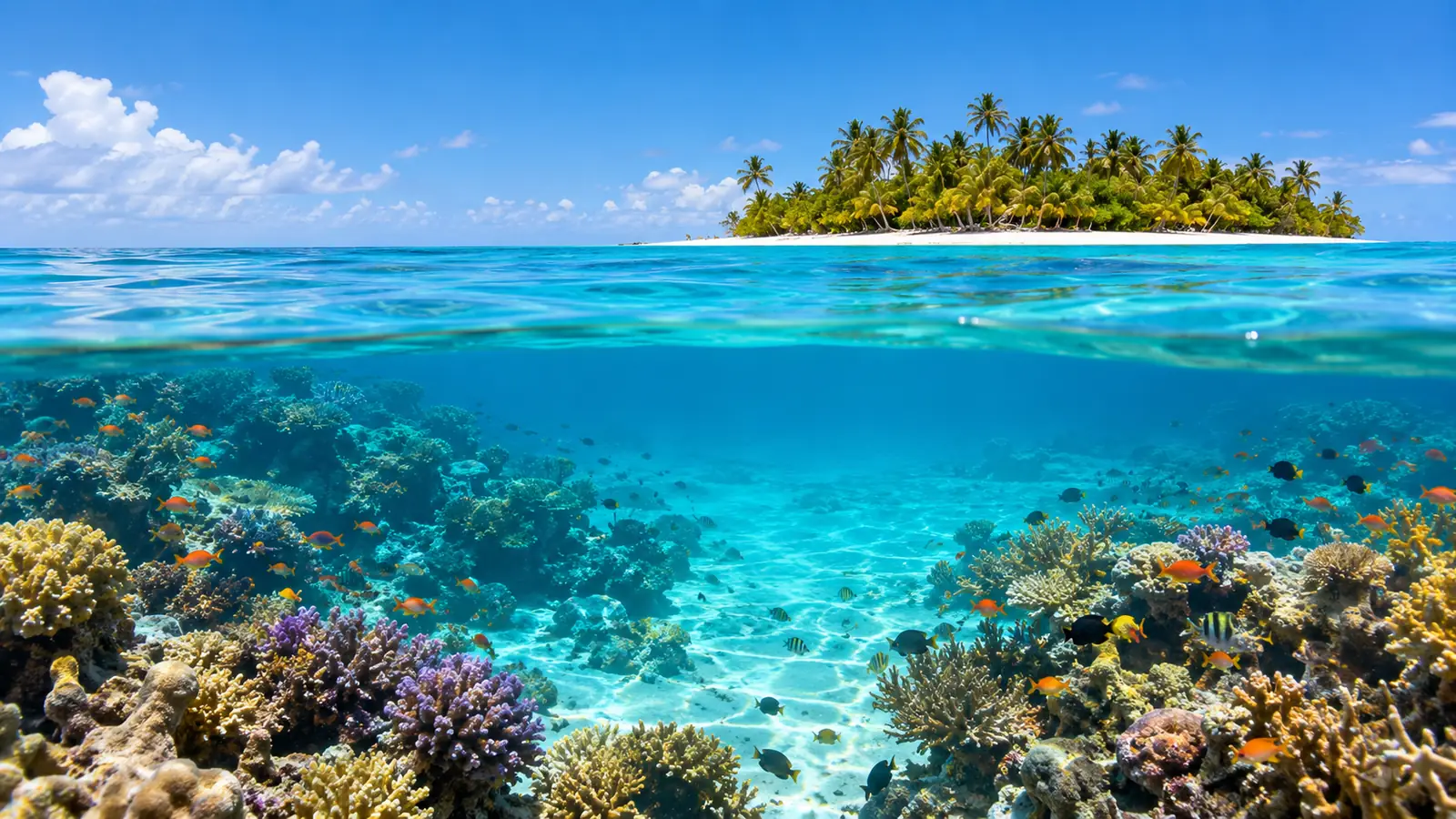
The Maldives is a chain of coral atolls in the Indian Ocean, and most of what makes it special is
under the surface. Warm water of about 27 to 30 °C all year, shallow lagoons and reef walls full of fish mean you
don't need to dive to see it: a mask, a snorkel and a short boat ride are enough. The question is which boat, from
where, and what it can really show you.
What a trip from Malé or Maafushi shows you
Most travellers who stay in Malé, Hulhumalé or on a guesthouse island such as Maafushi book their water tours
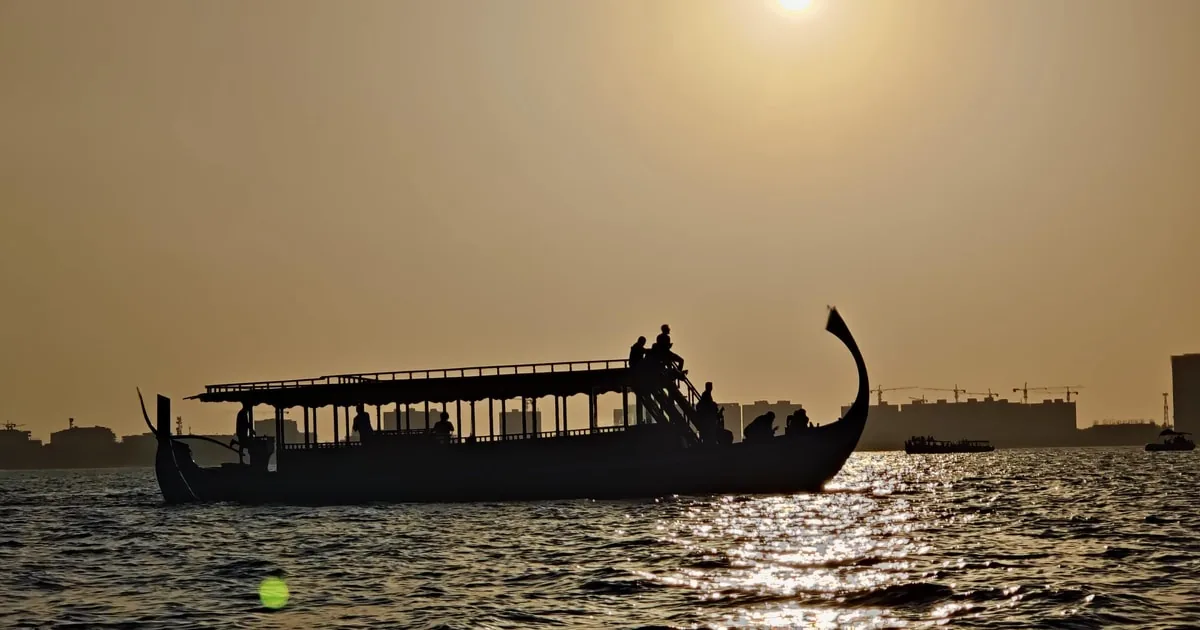
there. The boats are speedboats or traditional dhonis, the trips last from three hours to a full day, and the
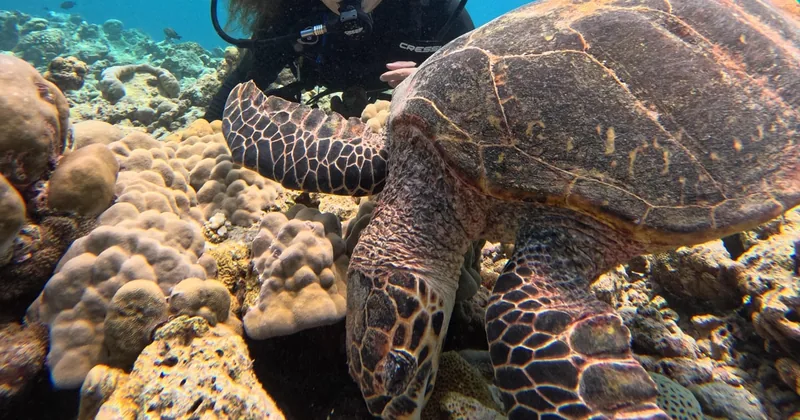
stops are within the North and South Malé atolls. Expect a coral reef with clouds of reef fish and often a turtle,
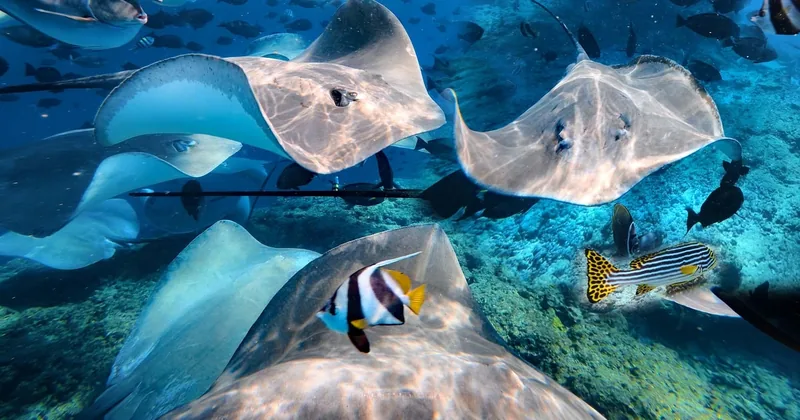
a shallow spot where nurse sharks and stingrays gather, a sandbank in the open lagoon, and on many trips a run
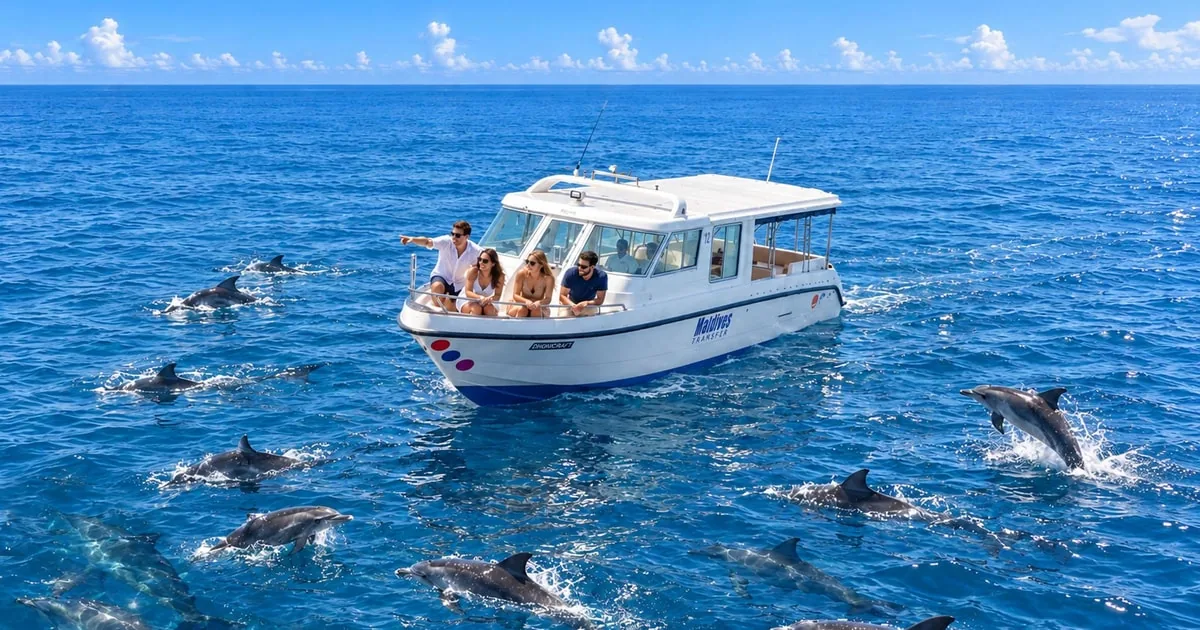
through a channel where spinner dolphins rest by day. You watch the dolphins from the boat; the sharks and rays
you see from the surface while a guide swims beside you.
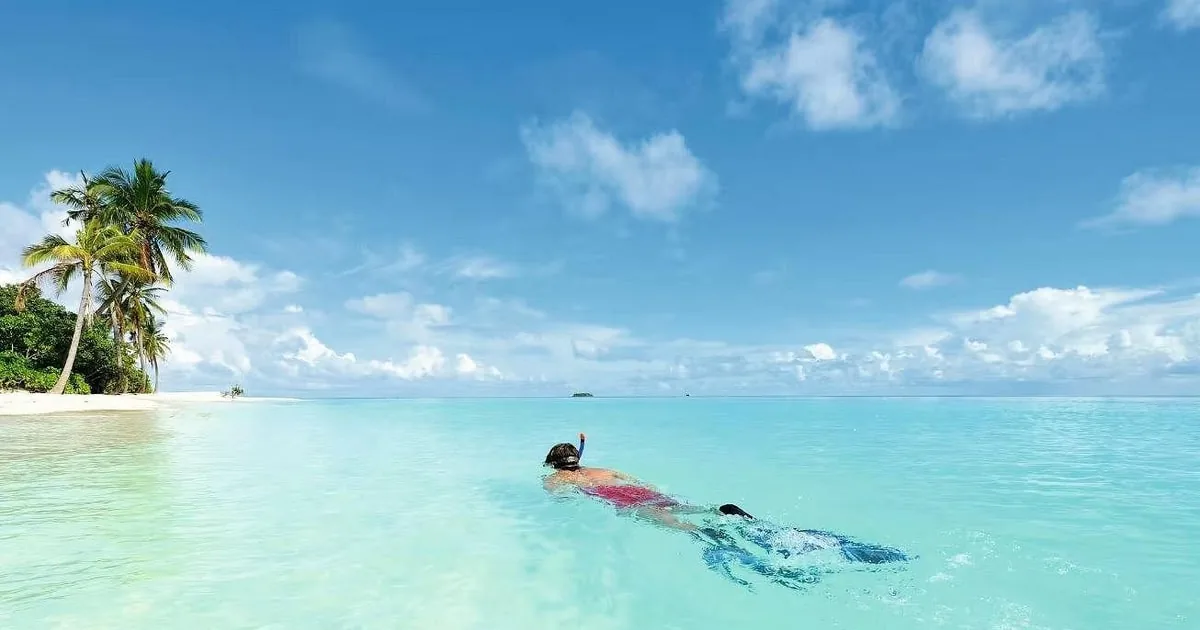
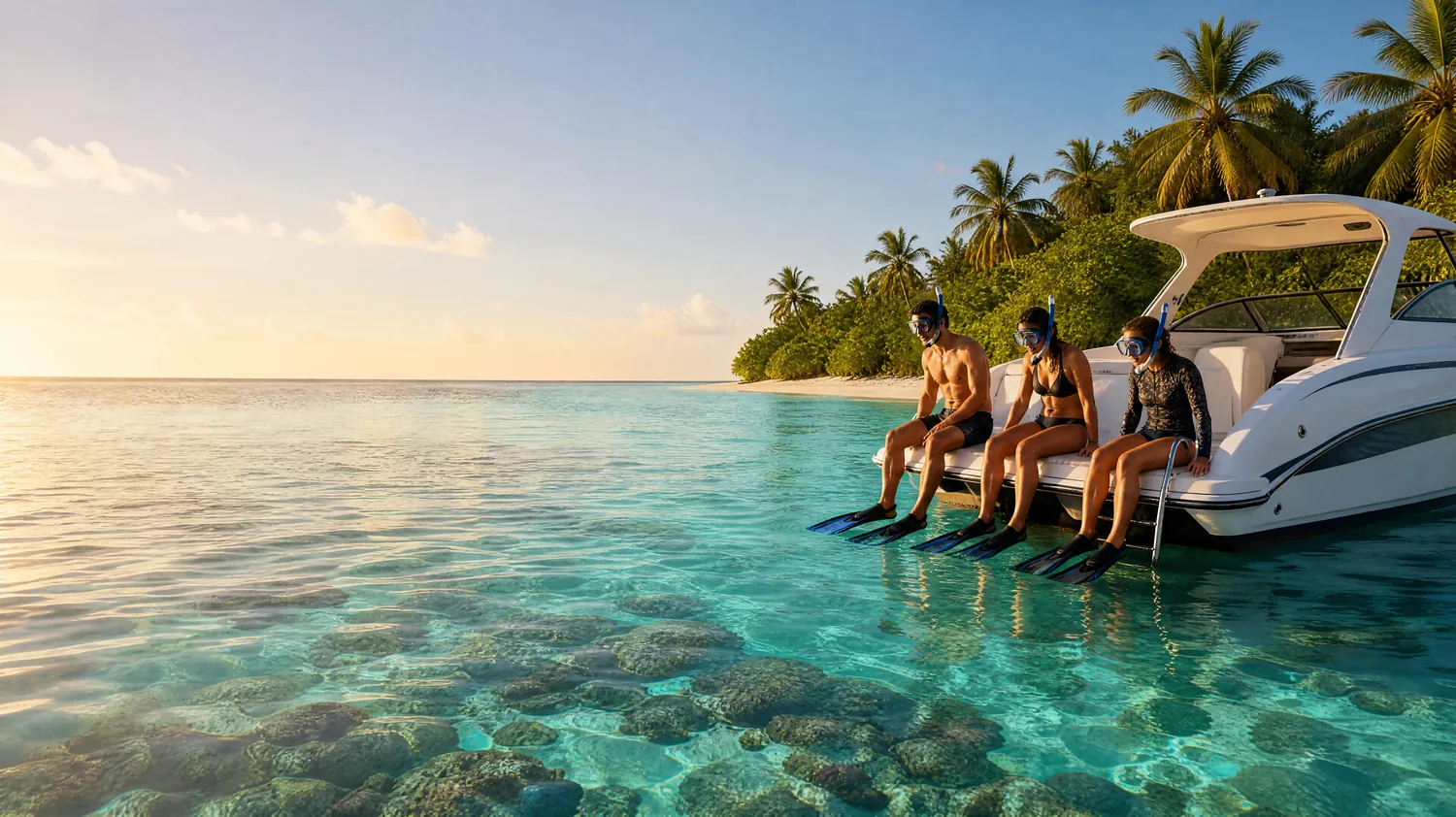
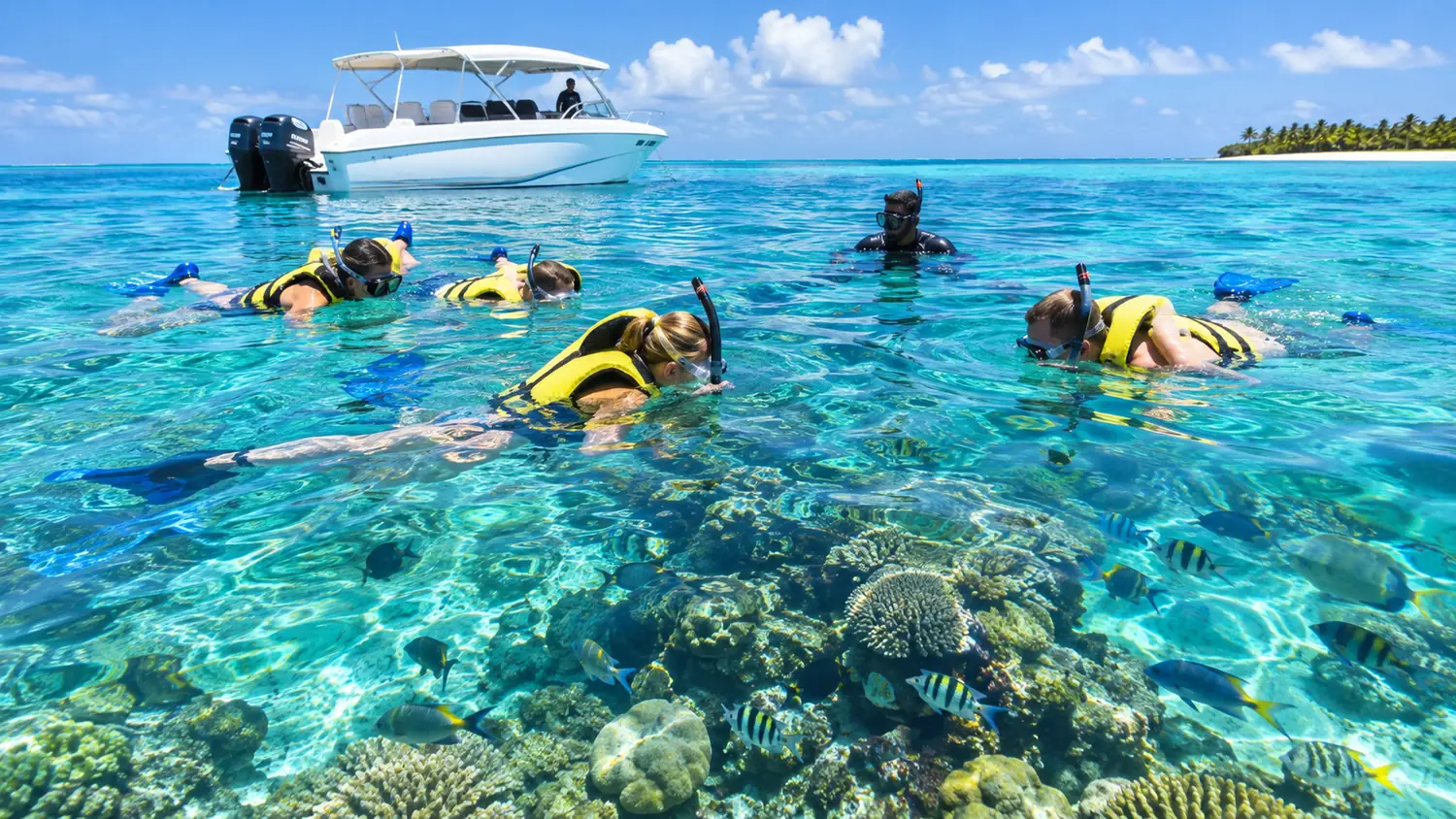
Fins on, ready for the first reef of the day.
Safe for beginners
These trips are made for people who are not regular snorkelers. Crews hand out life vests, masks and fins, brief
you before each swim and choose sheltered spots out of the current. Many guests who can't swim join with a vest
and a guide holding on to them, and reviewers mention it again and again. Nurse sharks are slow, bottom-resting
animals that ignore snorkelers; the stingrays come close because boats have visited the spot for years. Keep your
hands to yourself, never stand on coral, and you will be fine.
The honest small print: the reefs closest to Malé lost a large share of their coral in the
2024 marine heatwave and are recovering unevenly, so some shallow stops look greyer than the brochure. The outer
reef slopes and channels, where most boats go for turtles, sharks and rays, are still full of life. And the
big animals are wild: crews search hard, but no one can promise a whale shark, a manta or a dolphin on a given
day.
Sandbanks and the tide
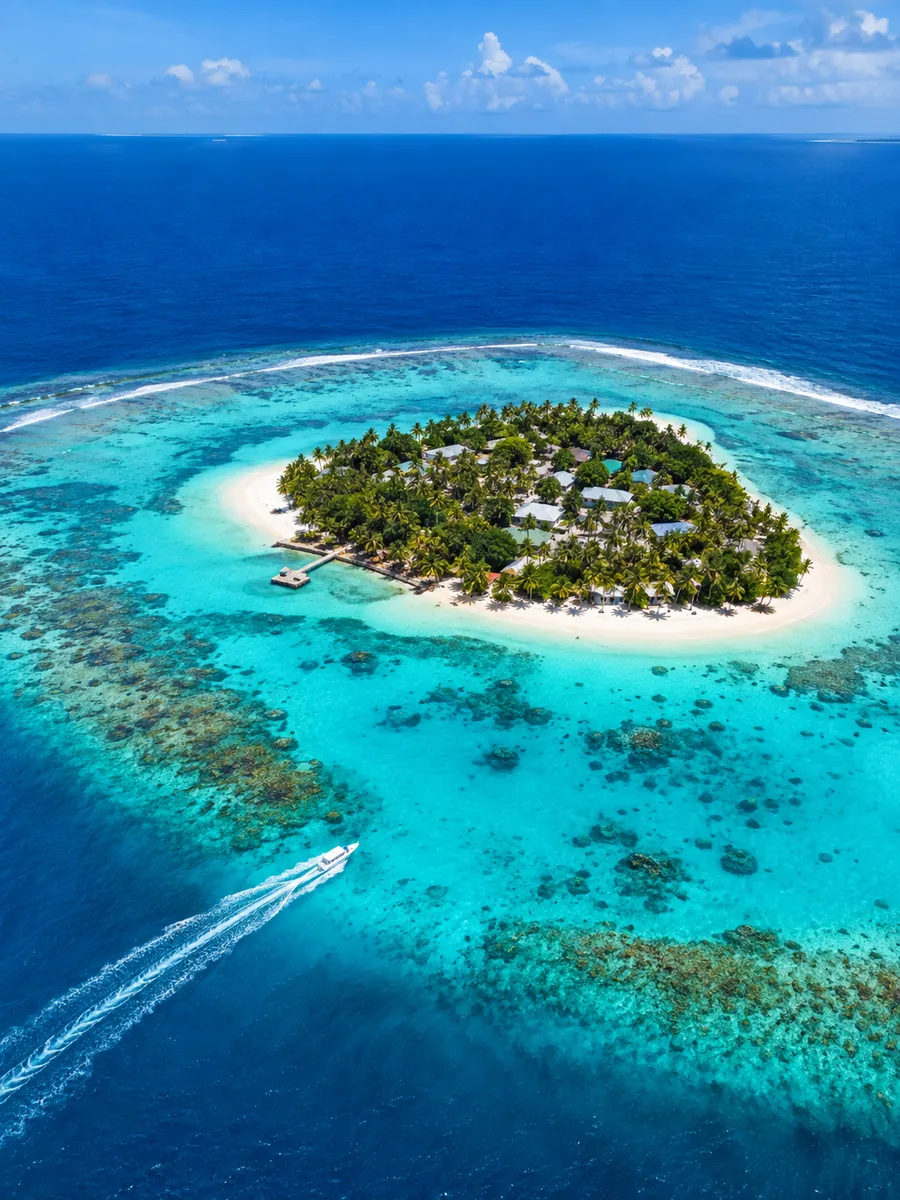
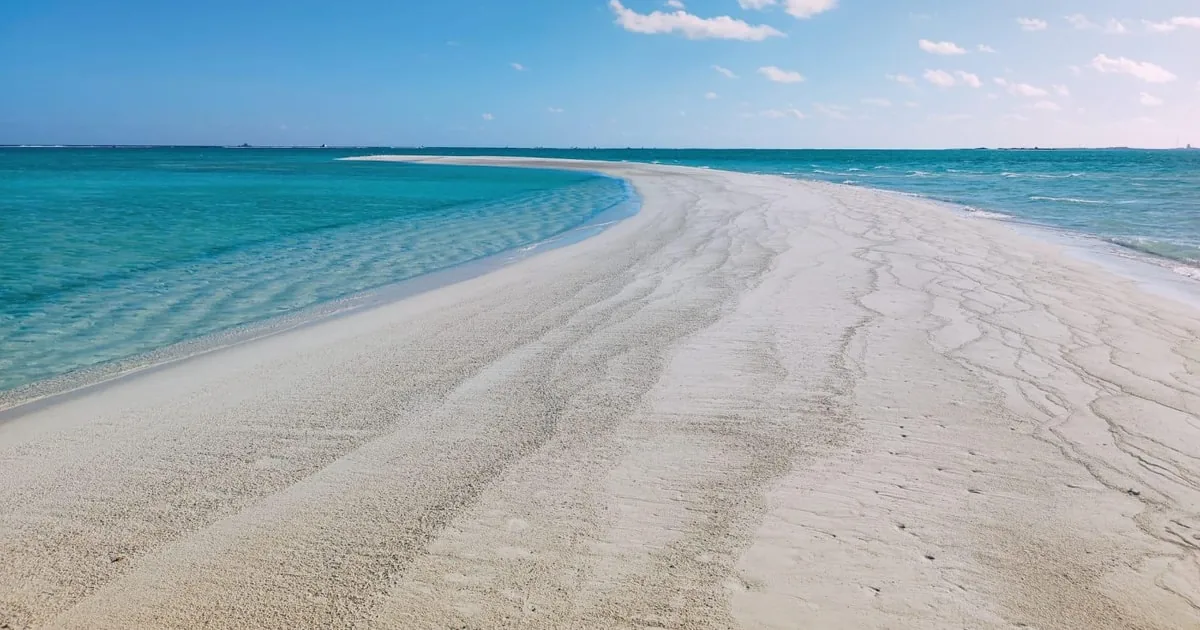
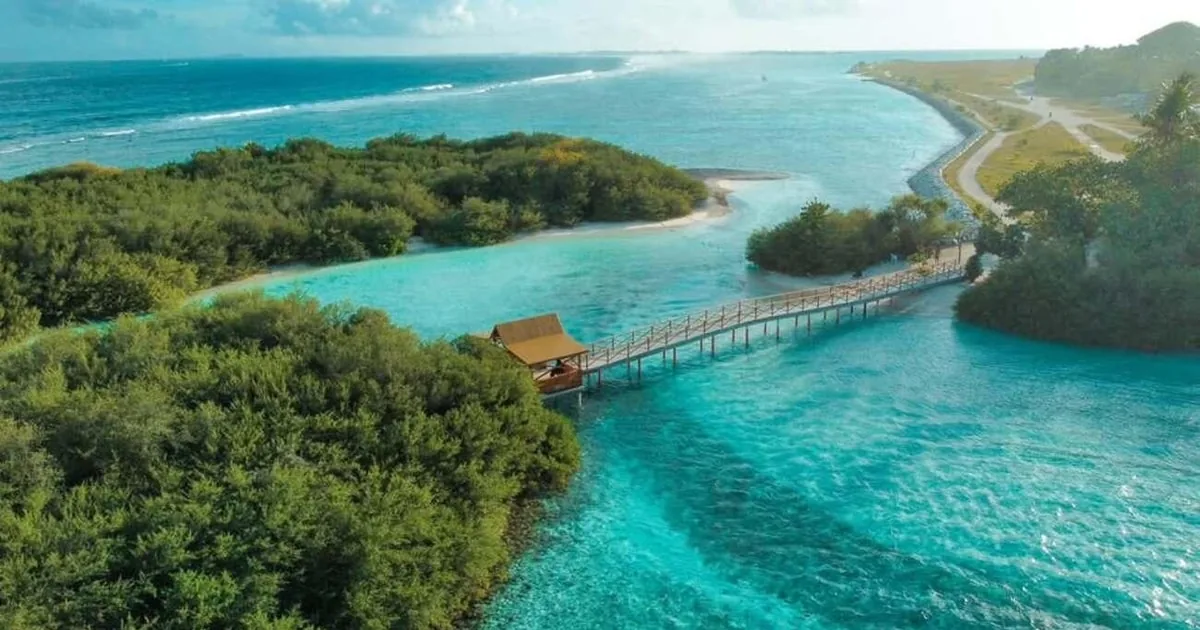
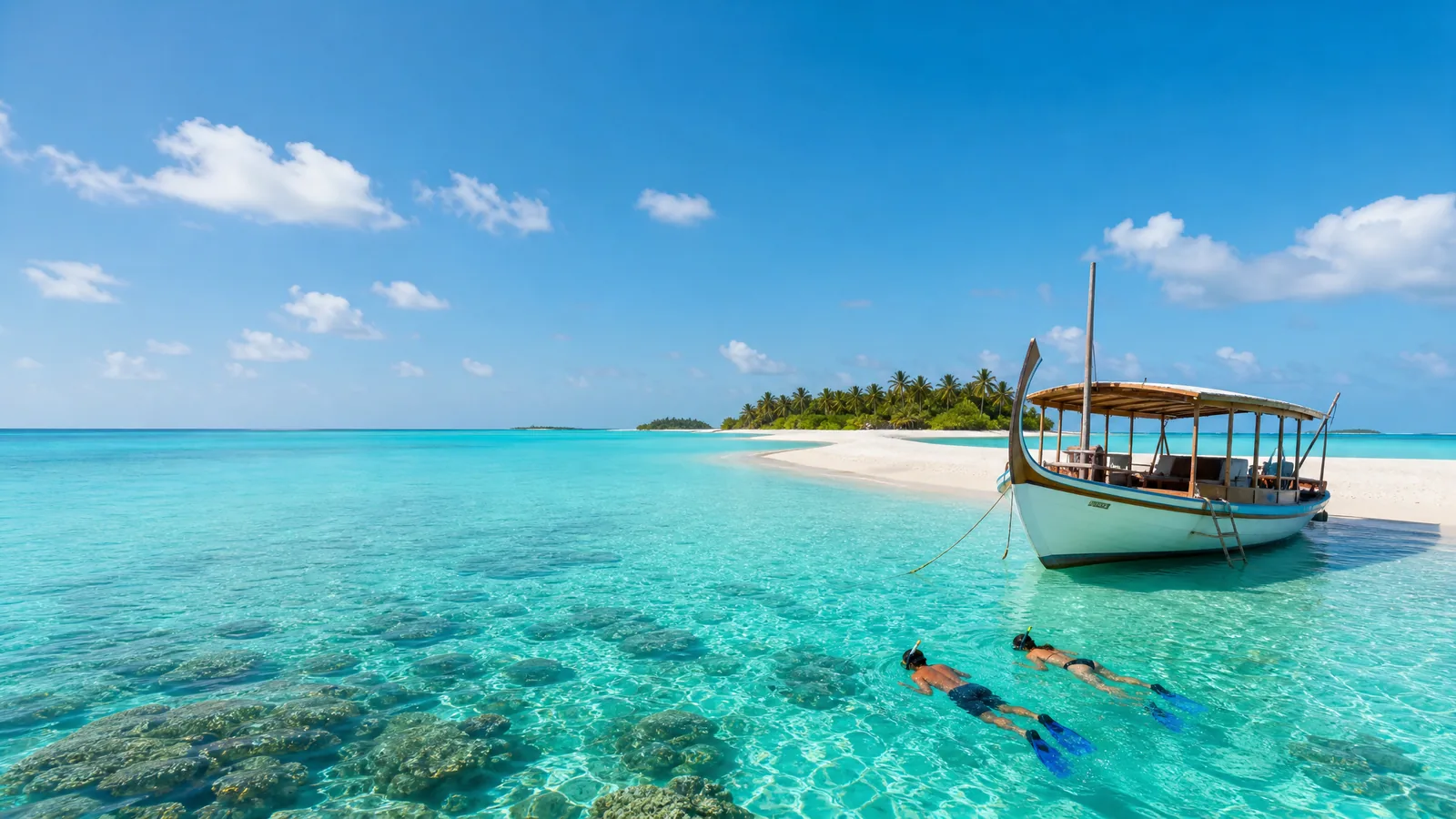
The sandbank stop is the picture everyone wants: a strip of white sand with turquoise water on every side. The
tidal range here is only about 1 m, but that is enough to cover a low sandbank, so operators set their departure
times by the tide on your date. Don't be surprised if your pickup time moves by an hour, and bring sun protection:
there is rarely any shade.
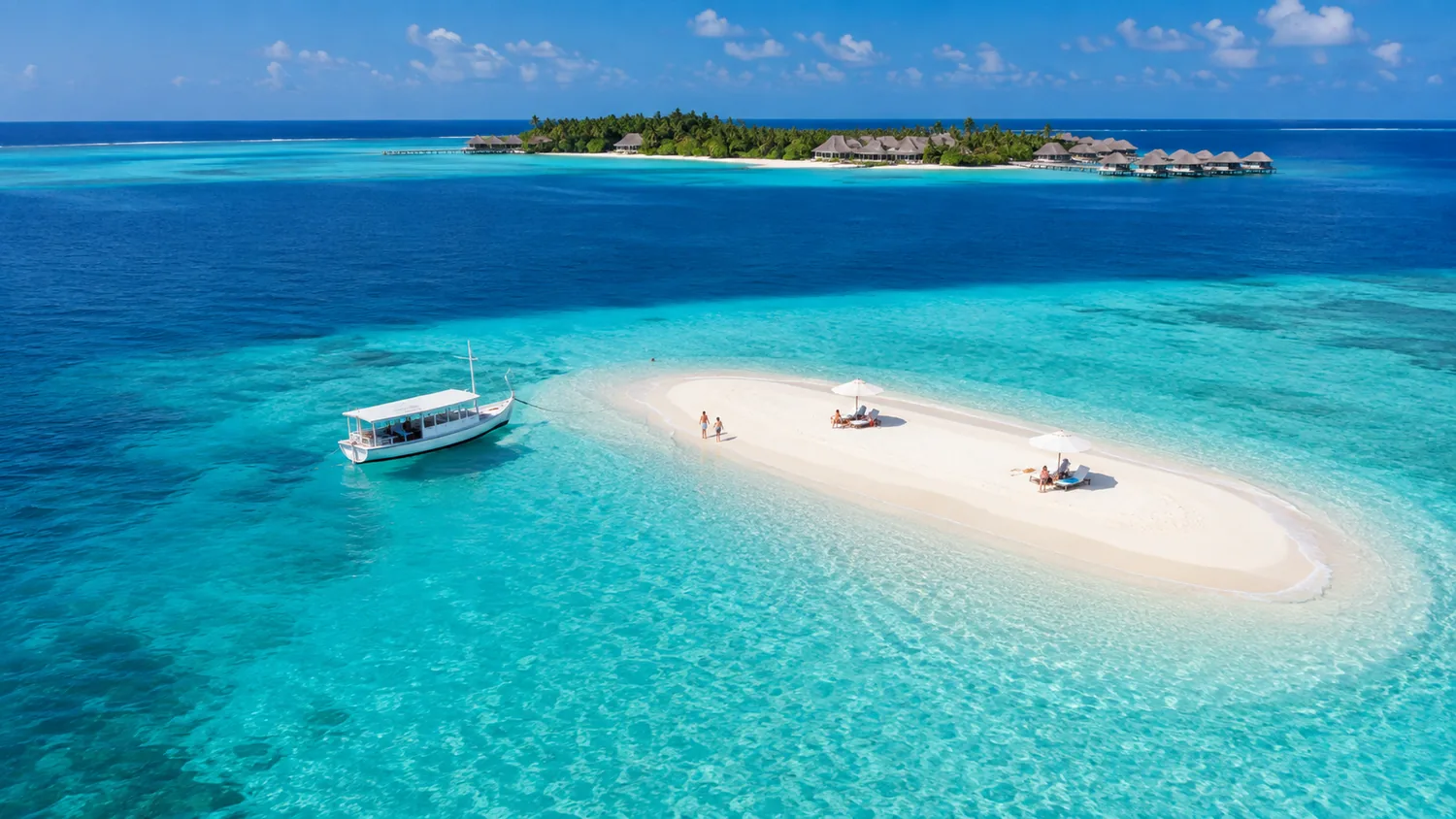
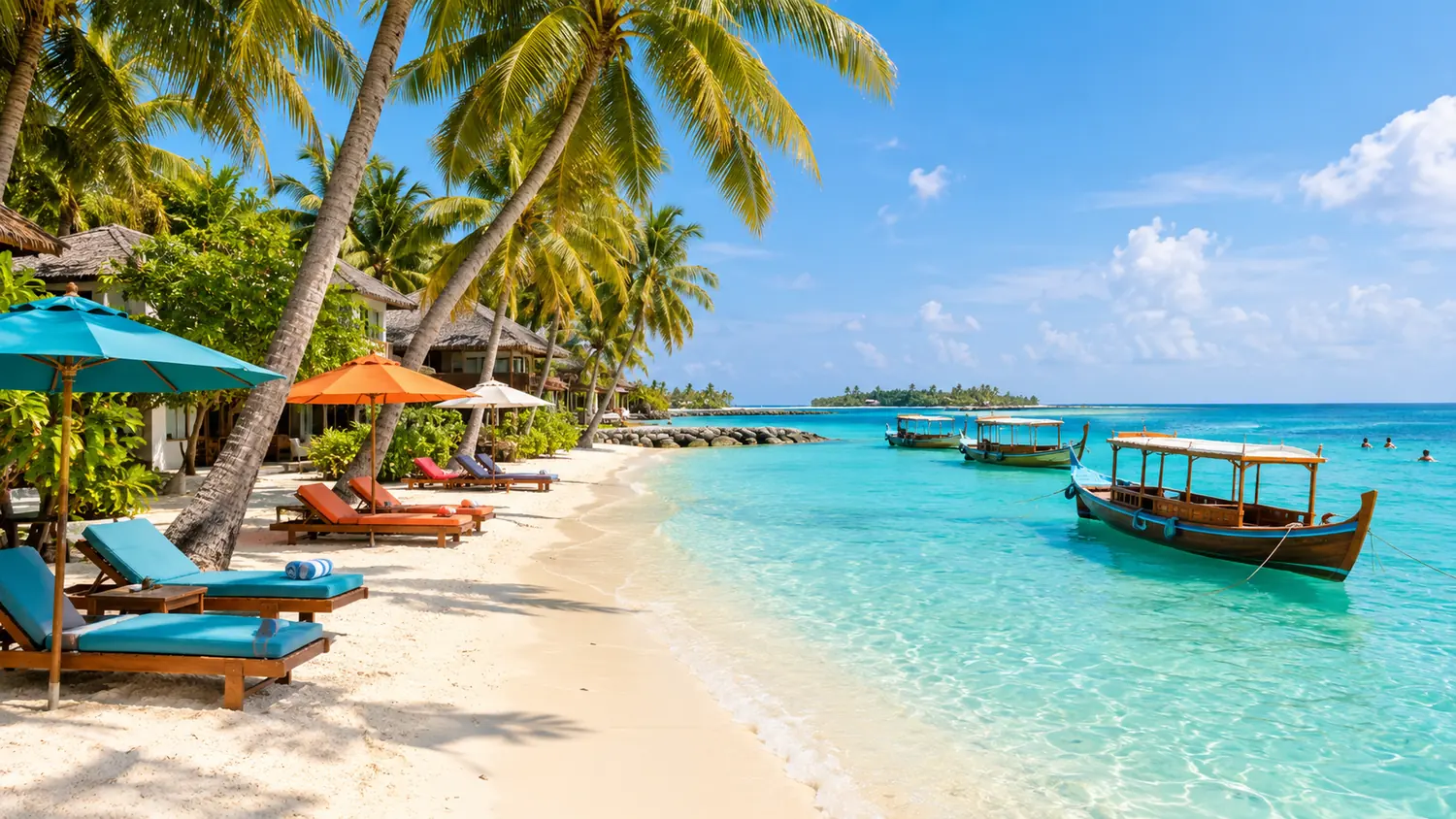
A sandbank at low tide, the boat waiting alongside.
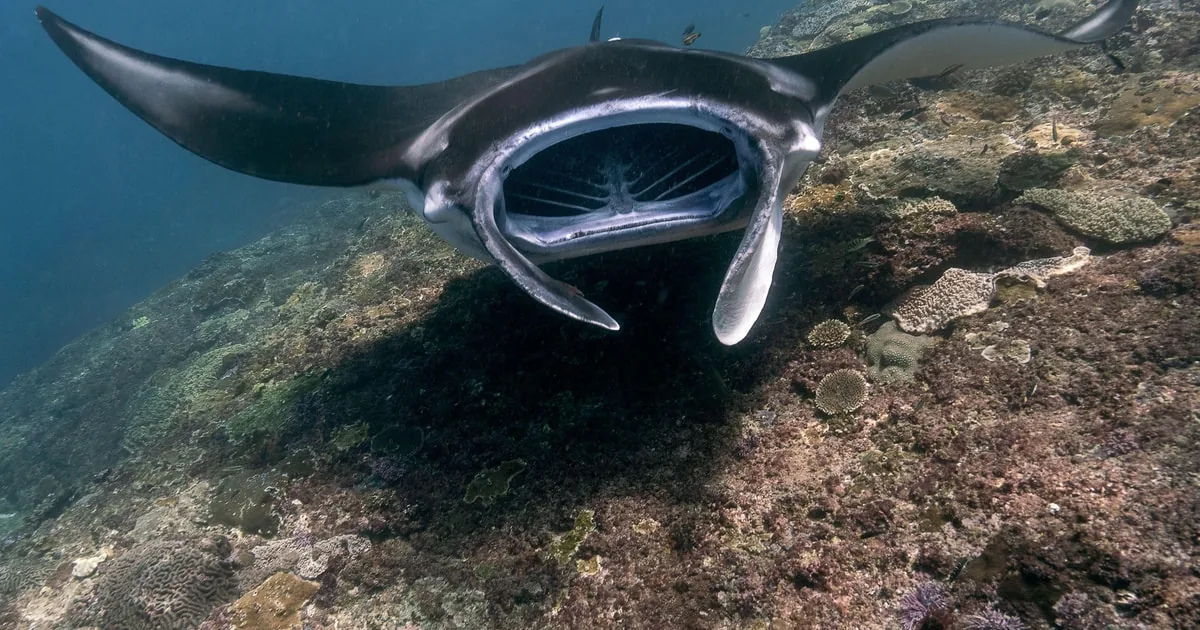
Whale sharks and mantas
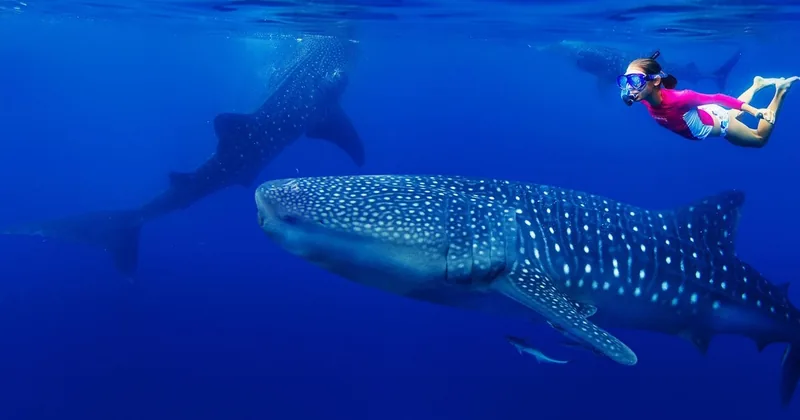
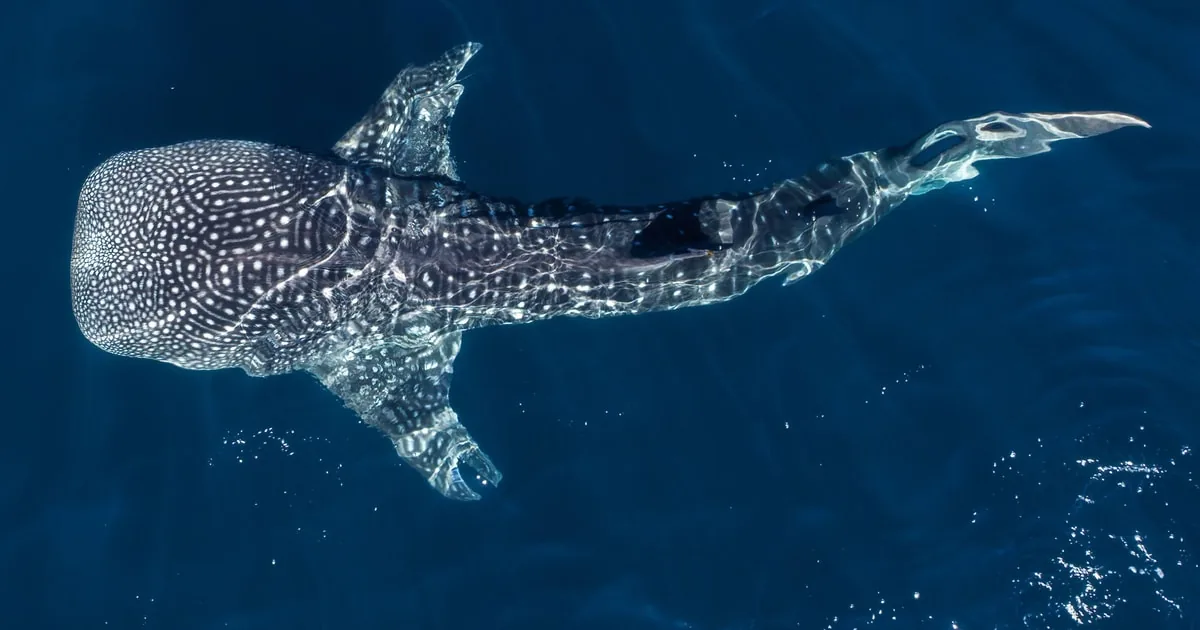
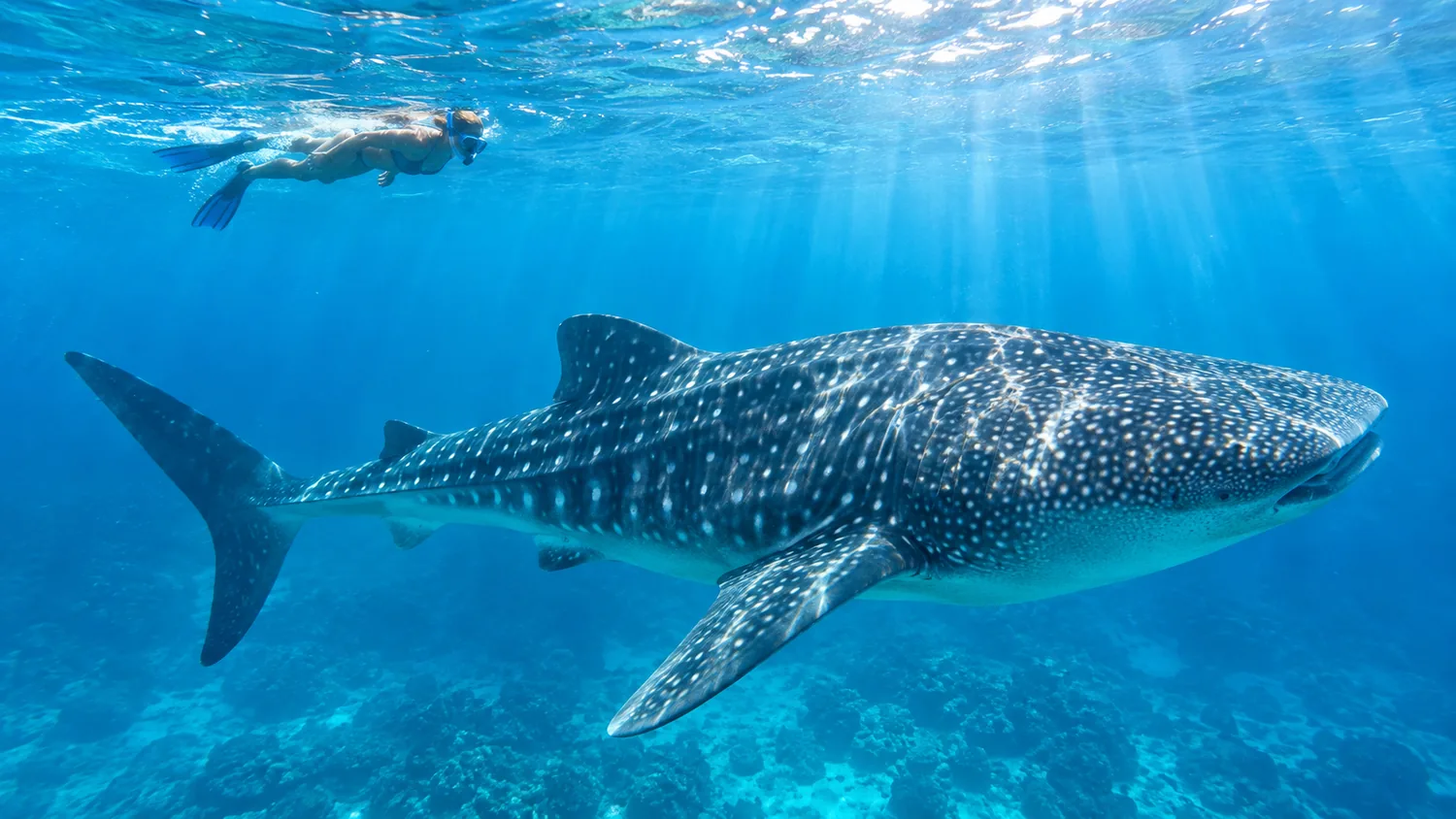
The two encounters people dream of need a little planning. Whale sharks gather in the South Ari marine area all
year, mostly young males that cruise near the surface between deeper dives. From Maafushi it is a long day with
about 90 minutes each way; from Dhigurah or Dhangethi it is a short morning. A national rule asks you to keep 3 m
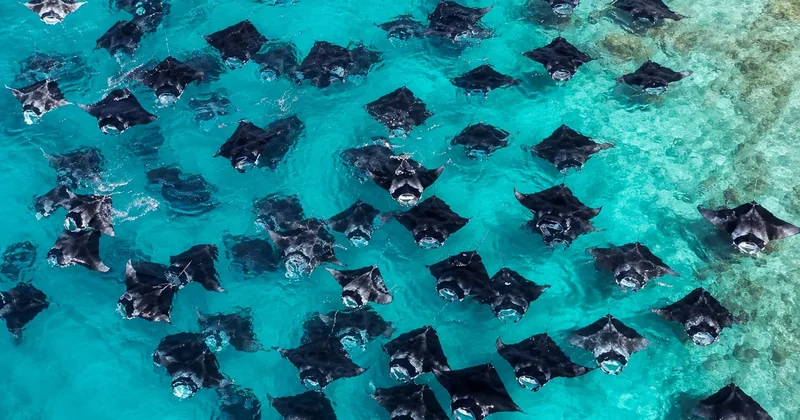
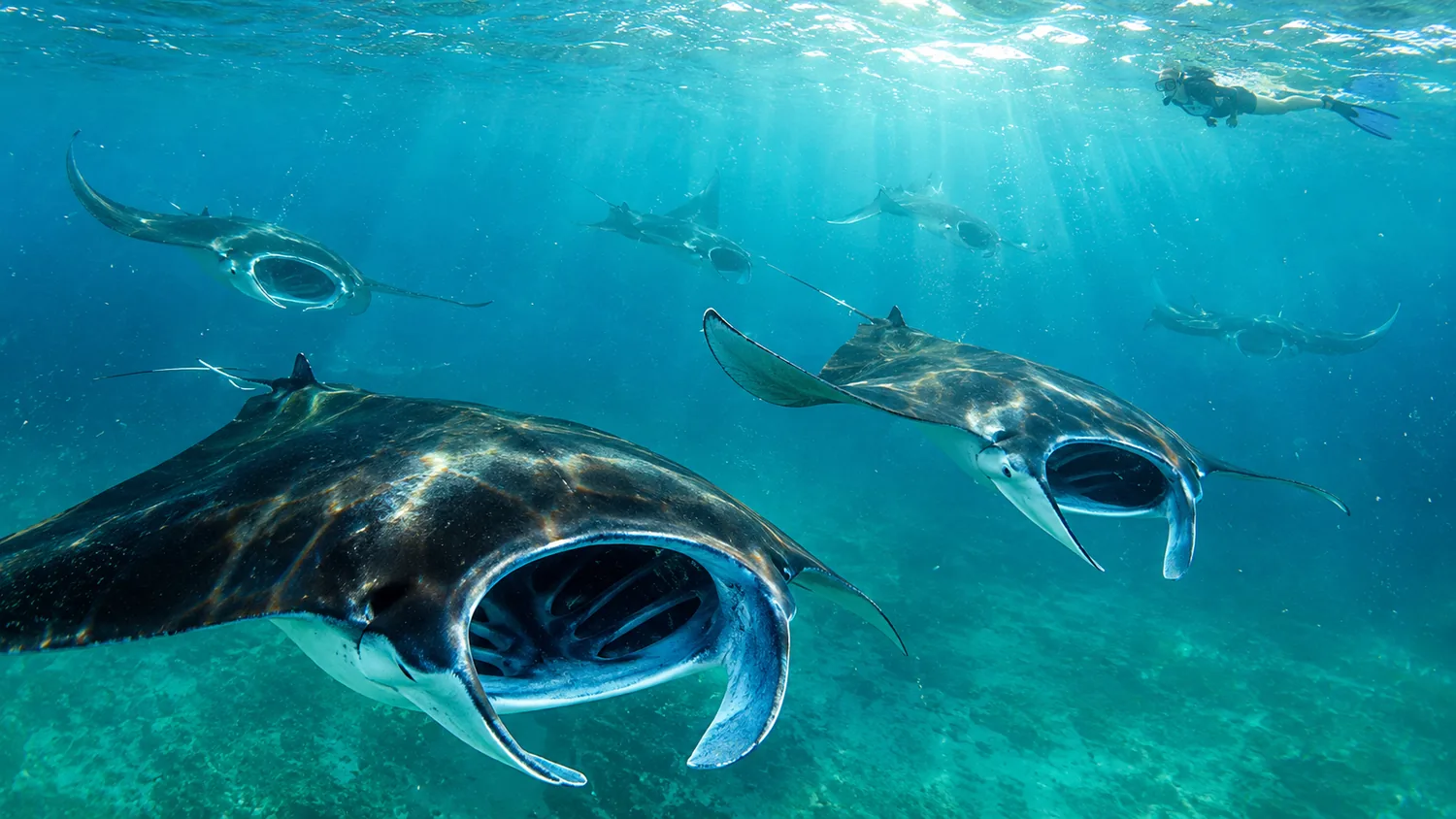
from the body and 4 m from the tail. Reef mantas, more than 6,000 of them identified here, visit cleaning stations
all year, and from about May to November they feed in their hundreds in Hanifaru Bay in Baa Atoll, where only
snorkeling is allowed and visits are time limited with rangers on site.
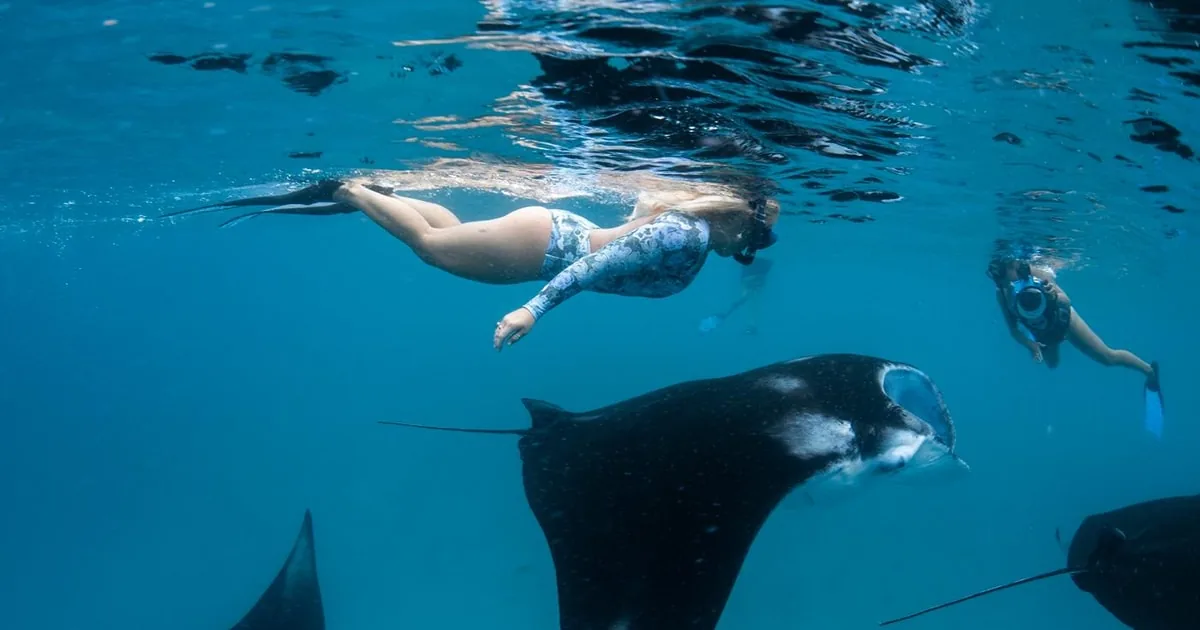
Mantas below, snorkelers above: the right way round.
Straight answers to what people ask most about water tours in the Maldives.
Is it safe to snorkel in the Maldives for beginners?
Yes. Guided snorkel trips start in calm lagoons and sheltered reef spots, the crew briefs you before each swim, and every boat on this site hands out life vests, masks and fins. A guide stays in the water with the group. Tell the crew how well you swim and they will keep you close. More in the best snorkeling trips in the Maldives.
Can non-swimmers join a snorkel trip?
Usually yes. Reviewers who cannot swim describe joining with a life vest and a guide holding on to them, and the Maafushi and Malé trips are used to it. A few trips, such as the Villimalé island snorkel, ask that you can swim. Dry options are in first dive, snorkel or submarine.
Are nurse sharks calm around snorkelers?
Yes. Nurse sharks are slow, calm sharks that rest on the sand and take no interest in snorkelers. They gather at a few shallow spots because boats have visited them for years. Float above them, keep your hands to yourself and never feed them: feeding sharks is against Maldivian rules.
Can you see whale sharks on a day trip from Maafushi or Malé?
Yes, but it is a long day. The whale sharks live in the South Ari marine area, about 82 km from Malé and roughly 90 minutes each way from Maafushi by speedboat. They are seen all year, yet no crew can promise one. Staying on Dhigurah makes it a short trip; both options in swimming with whale sharks.
When is manta season at Hanifaru Bay?
From about May to November, during the southwest monsoon, when plankton draws reef mantas into the bay in Baa Atoll, sometimes in their hundreds. Hanifaru is snorkel only, visits are time limited with rangers on site, and it is about 118 km from Malé. More in manta rays and Hanifaru Bay.
Do you swim with dolphins in the Maldives?
No, dolphin trips are watching cruises. Spinner dolphins rest in the reef channels by day, and boats slow down to watch them from a distance, usually at sunrise or sunset. Good crews never chase them or put swimmers in the water beside them.
Why do sandbank trip times change every day?
Because of the tide. The tidal range in the Maldives is only about 1 m, but that is enough to cover a low sandbank, so operators time the stop for lower water on your date. Expect your pickup time to move, and bring sun protection: there is rarely any shade.
What is the best time of year for Maldives water tours?
Any month works. December to April is the dry northeast monsoon, with calm, clear water and the best visibility. May to November is wetter, with short heavy showers, but brings the Hanifaru manta season. The sea stays about 27 to 30 °C all year. Month by month in the best time for water tours.
Can I wear a bikini on Maafushi?
Yes, on the island's bikini beach, on excursion boats and on sandbanks. In the village streets, cafes and shops, cover shoulders and knees. Alcohol is not served on local islands; it is limited to licensed resorts and licensed tourist boats. Everything else in Maafushi excursions.
Can you scuba dive without a licence in the Maldives?
Yes, with a Discover Scuba session: a short theory video, a fitting, and a shallow dive on a calm reef with an instructor beside you. You fill in a medical questionnaire first. After diving, wait at least 12 to 18 hours before flying, seaplanes included.
Is the coral in the Maldives still alive after bleaching?
Yes, though it took a hit. Many reefs around Malé lost coral in the 2024 marine heatwave and are recovering unevenly, while outer reef slopes and the southern atolls stayed in better shape. Fish, turtles, sharks and rays are still everywhere on the snorkel stops.
Do I need a visa for the Maldives?
No visa is needed in advance: a 30-day tourist visa is issued on arrival. You need a passport valid for at least one more month, a confirmed booking and a return ticket, and you fill in the online IMUGA traveller declaration within 96 hours before you arrive.
Ready to go
A short boat ride, a calm lagoon, the reef below.
Instant confirmation on GetYourGuide, and a full refund if you cancel up to 24 hours ahead.

 Most reviewed
★ 4.67 hours117 reviews
Most reviewed
★ 4.67 hours117 reviews